

You finally get a filling, crown, bridge, or veneer repaired, and for a moment, there is relief. Your bite feels better, your smile looks more like you again, and you hope the problem is behind you. Then a small worry creeps in. What if something you do every day shortens the life of that work without you even noticing? If that thought has crossed your mind, you are not overreacting. A family friendly dentist in Jackson, OH can tell you that dental work can last for years, but everyday habits can wear it down faster than expected. The good news is that a few changes can protect your investment, your comfort, and your oral health.
When people think about failed restorations, they often assume the issue starts in the treatment room. Sometimes it does, but often the bigger story unfolds afterward, at home, at night, or in the small routines that seem harmless. So, what tends to cause trouble?
Could Teeth Grinding Be Putting Pressure on Your Dental Restorations?
One of the most common threats to crowns, fillings, and veneers is grinding or clenching. You may do it while sleeping, during a stressful workday, or even while driving and not realize it. That constant force can crack porcelain, loosen bonding, wear down edges, and make restorations fail sooner than they should.
According to the National Institute of Dental and Craniofacial Research on bruxism, grinding and clenching can lead to jaw pain, tooth damage, and headaches. If you already have restorative work, that pressure does not just affect natural teeth. It also puts strain on the materials designed to protect them.
What does this look like in real life? Maybe you wake up with a sore jaw and assume you slept in a strange position. Maybe a crown feels “off” a few months after placement. Maybe a small chip appears on a veneer, and you cannot remember any accident. Those details matter. Left alone, grinding can turn a minor adjustment into a replacement.
This is one of the most overlooked habits that damage dental work, especially because it often happens without your awareness.
How Can Tobacco Use Shorten the Life of Restorative Dental Work?
Tobacco affects more than the color of your teeth. It can reduce blood flow to the gums, raise the risk of gum disease, slow healing, and make it harder for the tissues around a restoration to stay healthy. When the gums and supporting bone are compromised, even strong restorations can become unstable over time.
The CDC’s oral health facts on tobacco use explain that tobacco is linked to gum disease, tooth loss, and oral cancer. For someone with bridges, crowns, implants, or fillings, that matters a great deal. Restorations do not exist in isolation. They rely on healthy surrounding tissue to do their job well.
You might be thinking, “I do not smoke much, so does it still matter?” It can. Even occasional use may contribute to dry mouth, staining, inflammation, and slower healing after treatment. Smokeless tobacco can also irritate soft tissue and create trouble near the gumline, where decay or recession can expose the edges of dental work.
If you have invested in dental restoration care, tobacco can quietly work against that effort every day.
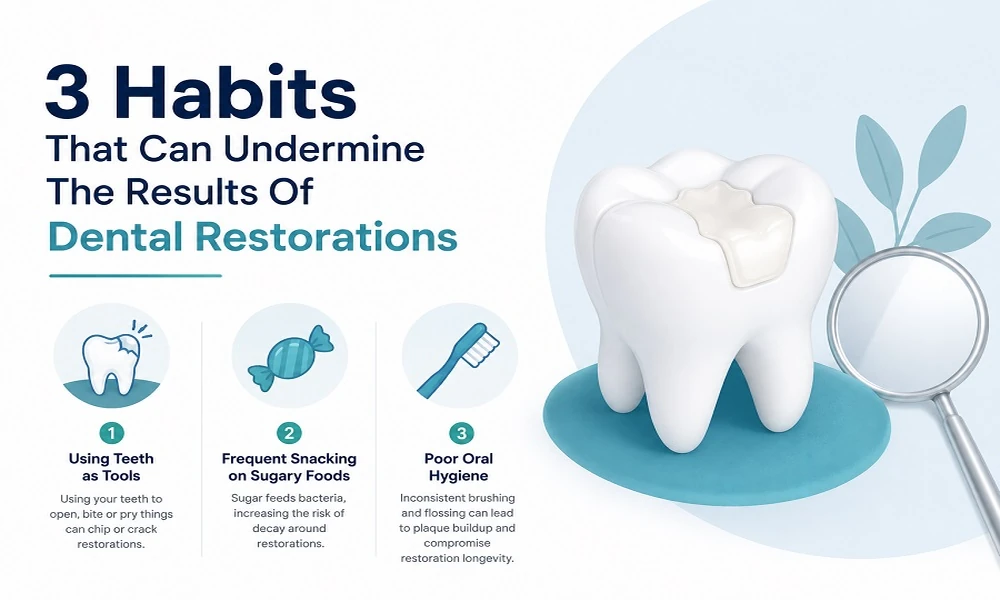
Can Skipping Daily Cleaning Lead to New Decay Around Restorations?
Yes, and this is the habit that catches many people off guard. A crown cannot get a cavity, but the tooth underneath it still can. A filling repairs damage, but it does not make the surrounding enamel immune to decay. If plaque builds up around the margins of a restoration, bacteria can find a way in, and the problem may stay hidden until it becomes painful or expensive.
MedlinePlus explains tooth decay as a process caused by bacteria, acids, and plaque buildup that damage the tooth structure. This is why brushing, flossing, and regular checkups matter so much after treatment. Restorations fix existing damage, but they do not replace basic home care.
Think of it this way. A beautifully placed crown on a poorly cleaned tooth is still at risk. If flossing feels difficult around a bridge, or if a back molar is hard to reach, that does not mean the area can be ignored. It means the cleaning approach may need to change.
Which Daily Habits Help or Hurt General Dentist Treatment Results?
It can help to see the pattern clearly. Some habits protect your results, while others slowly wear them down.
| Habit | What It Can Do to Restorations | Better Alternative |
| Grinding or clenching | Can crack, loosen, or wear crowns, fillings, and veneers | Ask about a night guard and stress reduction strategies |
| Tobacco use | Raises risk of gum disease, staining, dry mouth, and poor healing | Reduce or quit use and keep up with dental visits |
| Skipping brushing and flossing | Allows plaque and decay to form around restoration edges | Brush twice daily, floss well, and use tools made for bridges or tight spaces |
This is where many people feel stuck. They want their dental restorations to last, but life is busy, stress is high, and habits are hard to notice until they cause a problem. Still, small shifts can make a real difference.
What Can You Do Right Now to Protect Restorative Dental Work?
1. Pay attention to pressure.
If you wake up with jaw soreness, tooth sensitivity, or headaches, mention it at your next visit. If a crown feels high or a filling feels rough, do not wait for it to get worse. Early adjustments can prevent larger damage.
2. Be honest about tobacco and dry mouth.
You do not need to feel judged to talk about smoking, vaping, or smokeless tobacco. These details help guide care. If your mouth often feels dry, say that too, since less saliva can raise the risk of decay around restorations.
3. Clean around the margins, not just the visible tooth.
Focus on the gumline and the edges of crowns, fillings, and bridges. If floss snags or a space is hard to reach, ask about floss threaders, interdental brushes, or other tools that fit your mouth better. Good technique matters more than perfection.
Where Does That Leave You if You Want Your Dental Work to Last?
If you have had restorative treatment, you have already taken an important step. Now the goal is to protect it. Grinding, tobacco use, and poor daily cleaning are three of the biggest habits that can shorten the life of restorations, but they are also habits you can address with the right support. A trusted general dentist can help you spot early warning signs, adjust your routine, and keep small issues from turning into bigger ones.
If something feels different, or if you simply want peace of mind about your current dental work, schedule a visit with a general dentist and ask whether any daily habits may be putting your restorations at risk.