

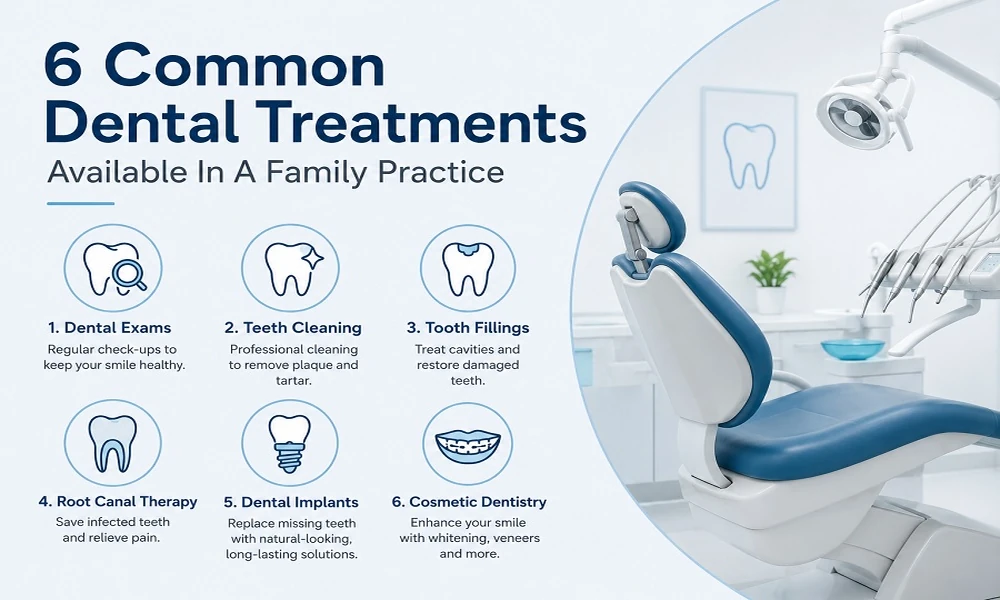
You might not think much about dental care until something starts to hurt, a filling falls out, or your child comes home from school saying a tooth feels “funny.” That is often how it goes. One small issue can suddenly turn into stress about pain, cost, timing, and what treatment even makes sense. If you are trying to understand the 6 Common Dental Treatments Available In A Family Practice, a Riverview family dentist can help explain your options. The good news is that most routine dental problems have clear, familiar solutions, and many of them are easier to handle when caught early.
For most families, a family dentist helps with prevention, repair, and comfort. That can include cleanings, exams, fillings, crowns, root canal treatment, and sealants. Some visits are about stopping trouble before it starts. Others are about fixing damage and helping you eat, speak, and smile without worry. So, what do these treatments actually do, and when might you need them?
Why do routine family dental services matter so much?
It is easy to put off a dental visit when life is busy, especially if the problem seems small. But a small cavity can grow, gum irritation can worsen, and a chipped tooth can become more painful with time. Because of that, regular care in a family practice often saves you from bigger procedures later.
A family dental practice usually treats both children and adults, which makes care simpler when you want one place that understands your household’s history. That matters more than people think. A dentist who sees your child for preventive care today may be the same one who spots orthodontic concerns, monitors development, or treats a cavity before it becomes an emergency.
And for adults, routine visits are often where hidden problems are found. You may feel fine, yet still have decay between teeth, worn enamel from grinding, or early gum disease. Would you rather hear about a problem when it needs a simple fix, or after it becomes painful and expensive?
What are the 6 common dental treatments available in a family practice?
The first and most familiar treatment is the routine exam and professional cleaning. This is the foundation of preventive care. During these visits, plaque and tartar are removed, gums are checked, and the dentist looks for signs of decay, infection, or bite issues. Cleanings do more than polish teeth. They help stop small concerns from becoming larger ones.
The second common treatment is dental fillings. When a cavity forms, the decayed part of the tooth is removed and replaced with filling material to restore strength and shape. If you want a plain language overview of how fillings work, the National Institute of Dental and Craniofacial Research explains dental fillings clearly. Fillings are among the most common services in general and family dentistry because tooth decay is so common across all ages.
The third treatment is crowns. A crown covers a damaged or weakened tooth, helping protect it after a large cavity, fracture, or root canal. If a filling is not enough to support the tooth, a crown often gives that tooth a longer life. This can be especially helpful when you want to avoid losing the tooth altogether.
The fourth is root canal treatment. People often feel nervous when they hear those words, but the goal is simple. It removes infected tissue inside the tooth, relieves pain, and saves the outer tooth structure when possible. MedlinePlus offers a helpful explanation of root canal treatment if you want to know what to expect.
The fifth common service is tooth extraction. Even though dentists usually try to save natural teeth first, there are times when removing a tooth is the safest option. This may happen with severe decay, advanced infection, crowding, or a tooth that is too damaged to repair.
The sixth treatment is sealants, especially for children and teens, though some adults can benefit too. Sealants are thin protective coatings placed on the chewing surfaces of back teeth, where cavities often start. The National Institute of Dental and Craniofacial Research explains how dental sealants help block out food and bacteria.
How do these family dentist treatments compare in everyday life?
When you hear a list of treatments, it can all blur together. What helps most is understanding the purpose of each one and when it usually comes into play. The table below gives you a quick way to compare common options you may hear about during a visit.
| Treatment | Main Purpose | When It Is Often Needed | Prevention or Repair |
| Exam and Cleaning | Remove buildup and check oral health | Routine visits, early detection | Prevention |
| Filling | Repair a cavity | Small to moderate tooth decay | Repair |
| Crown | Protect and strengthen a damaged tooth | Large cavity, cracked tooth, after root canal | Repair |
| Root Canal | Treat infection inside the tooth | Severe decay, infection, nerve pain | Repair |
| Extraction | Remove a tooth that cannot be saved | Severe damage, infection, crowding | Repair |
| Sealants | Shield grooves in back teeth from decay | Children, teens, some cavity-prone adults | Prevention |
This is where many families feel torn. Preventive care may seem easy to delay because nothing hurts yet. But repair work usually costs more time, more money, and more discomfort than prevention. That is why regular visits matter so much in common dental treatments planning. They give you options while the problem is still small.
What steps can you take right now to protect your family’s teeth?
1. Pay attention to small signs. Sensitivity, bleeding gums, bad breath that does not go away, or a child avoiding chewing on one side can all be clues. These issues do not always mean a major problem, but they do mean it is worth checking.
2. Ask what is preventive and what is restorative. If a dentist recommends treatment, ask whether it is meant to stop future damage or fix current damage. That simple question helps you understand urgency, cost, and timing without feeling overwhelmed.
3. Keep routine appointments on the calendar. It sounds basic, but consistency is one of the best tools in dental care. A cleaning and exam can catch concerns before they become fillings, crowns, or extractions.
Where does that leave you if dental care has been on the back burner?
If you have been putting off a visit, you are not alone. Many people do. Life gets busy, budgets get tight, and dental worries can feel easier to ignore until they are not. Still, knowing the usual options can take some of the fear out of the process. A family dentist can help with prevention, early treatment, and repair, all in one setting that works for both kids and adults.
When you understand the 6 Common Dental Treatments Available In A Family Practice, it becomes easier to ask the right questions and make calm, informed choices. If it has been a while since your last visit, now is a good time to schedule a checkup and find out what your teeth need before a small issue becomes a bigger one.