

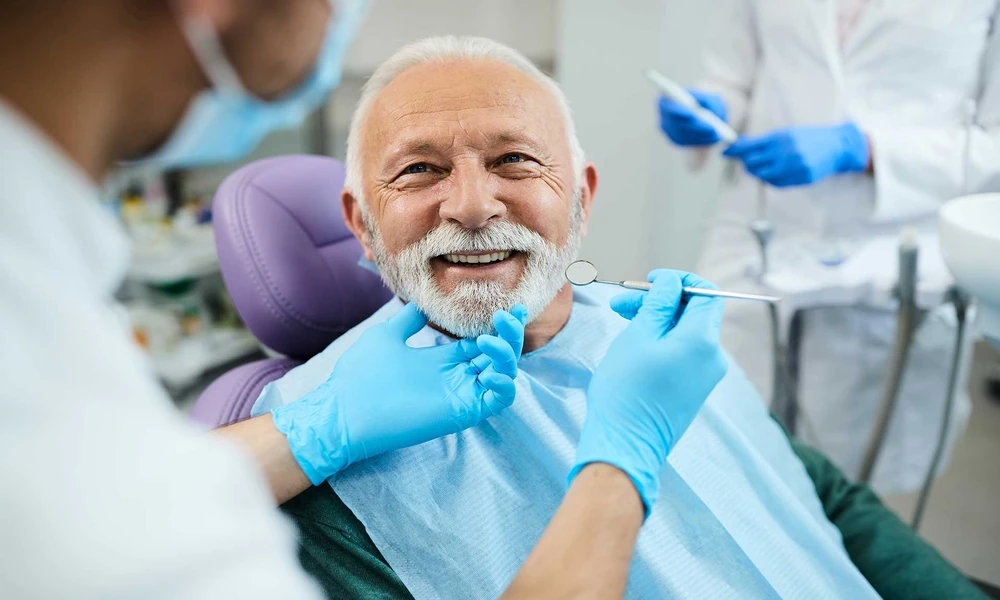
You may already know what bothers you when you smile. A chipped front tooth, worn edges, old dental work that no longer matches, or teeth that function poorly and look tired at the same time. What often adds stress is that the fix does not feel simple. An Albany dentist can help you understand your options. You are not choosing between looks and function. You want both, and you should not have to settle for one.
That is where collaboration changes the result. When a cosmetic and restorative dentist works in a coordinated way with specialists, lab technicians, and modern material science, your treatment tends to fit better, last longer, and look more natural. How Collaboration Enhances Cosmetic And Restorative Outcomes comes down to one idea. Better communication creates better planning, and better planning protects both your smile and your bite.
Cosmetic and restorative dentistry works best when form and function are planned together
A smile makeover can look good in a photo and still feel wrong in daily life. If your bite is off, if a crown is too bulky, or if veneers are placed without looking at wear patterns, you may end up with jaw strain, chipping, speech changes, or work that needs to be redone sooner than expected. That is frustrating when you have already invested time, money, and trust.
Collaborative cosmetic and restorative care lowers that risk because each part of your case informs the next. The cosmetic side focuses on shape, color, symmetry, and how your smile fits your face. The restorative side focuses on strength, bite force, tooth structure, and long term stability. Those goals are connected. If one is ignored, the other can suffer.
Picture a patient with front teeth that look short and uneven. The quick answer might be bonding or veneers. The deeper question is why the teeth became short in the first place. Grinding at night, acid wear, gum changes, or an unstable bite can all be part of the story. If the visible problem is treated without the cause, the new work may not hold up. A cosmetic and restorative dentist who coordinates with the right professionals can identify those causes before the final design is placed.
Team based planning improves materials, fit, and long term comfort
Dental treatment has changed because materials and techniques have changed. Stronger ceramics, improved bonding systems, digital scans, and better fabrication methods give dentists more ways to preserve tooth structure while improving appearance. Research supported by the National Institute of Dental and Craniofacial Research has helped drive advances in dental materials, which matters to you when a restoration must survive real chewing forces and still blend into your smile.
Material choice is not just a technical detail. It affects translucency, stain resistance, thickness, durability, and how much natural tooth needs to be reshaped. A patient who needs a single front crown has different needs than someone rebuilding several worn teeth. Collaboration between the treating dentist and the dental lab often makes the difference between a restoration that merely fits and one that disappears into your smile.
This also connects to broader work in biomaterials, devices, and clinical technologies. Better tools support better planning, but tools alone are not enough. The people using them must share the same treatment goal. If the dentist, specialist, and lab technician are not aligned on bite position, shade, contour, and gum harmony, the final result can feel pieced together.
For patients with missing teeth, heavily restored teeth, or bite collapse, the need for coordination grows. A case may involve periodontal care, endodontic treatment, orthodontic movement, or implant planning. According to the clinical overview in restorative and prosthetic oral care, successful outcomes depend on matching diagnosis, materials, and biomechanics to the patient’s specific condition. That is the difference between treatment that looks finished and treatment that is actually stable.
Independent treatment planning and collaborative treatment planning produce different outcomes
| Approach | What Often Happens | Likely Impact on You |
|---|---|---|
| Single focus cosmetic treatment | Attention stays on color and shape, with limited bite analysis | Good initial appearance, higher chance of discomfort or early wear |
| Single focus restorative treatment | Function is repaired, but smile design may be less refined | Teeth work better, appearance may still feel mismatched or artificial |
| Collaborative smile restoration | Cosmetics, bite, materials, gum health, and lab communication are planned together | More natural look, stronger function, fewer surprises during treatment |
| Reactive care after failure | Repairs happen after chips, pain, looseness, or repeated breakage | Higher cost over time, more visits, more stress |
The cost question is real. Coordinated care can feel like more effort at the start because it often includes records, photos, scans, wax ups, or specialist input. Yet that upfront planning can prevent remakes and repeated repairs. If you have ever paid twice for dental work, you already know that the cheapest first step is not always the least expensive path.
Clear steps help you choose the right cosmetic and restorative care
Ask how your bite and smile will be evaluated. You want more than a shade match. Ask whether your dentist will study wear, jaw movement, gum levels, and existing restorations before recommending treatment. A strong plan explains both appearance and function in plain language.
Request a preview of the final result. This may be a mock up, digital design, or temporary version you can test. Seeing and feeling the plan before the final work is placed helps catch problems early. It also gives you a better sense of tooth length, speech, and comfort.
Find out who is involved in the case. Ask whether a specialist or lab technician will contribute to planning, and how information is shared. A dentist who welcomes collaboration is usually focused on precision, not ego. That matters when your case includes multiple concerns at once.
Better outcomes come from shared planning, not isolated decisions
If you are weighing treatment, your concern is not just whether your teeth can be fixed. It is whether they can be fixed in a way that feels like you, works every day, and holds up. That is why enhanced cosmetic and restorative results often come from collaboration. The right plan respects appearance, comfort, and durability at the same time.
You do not need to sort through every technical detail on your own. You do need a dental team that sees the full picture and treats it that way. If you are considering care from a cosmetic and restorative dentist, ask for a plan built on coordination, not shortcuts.