

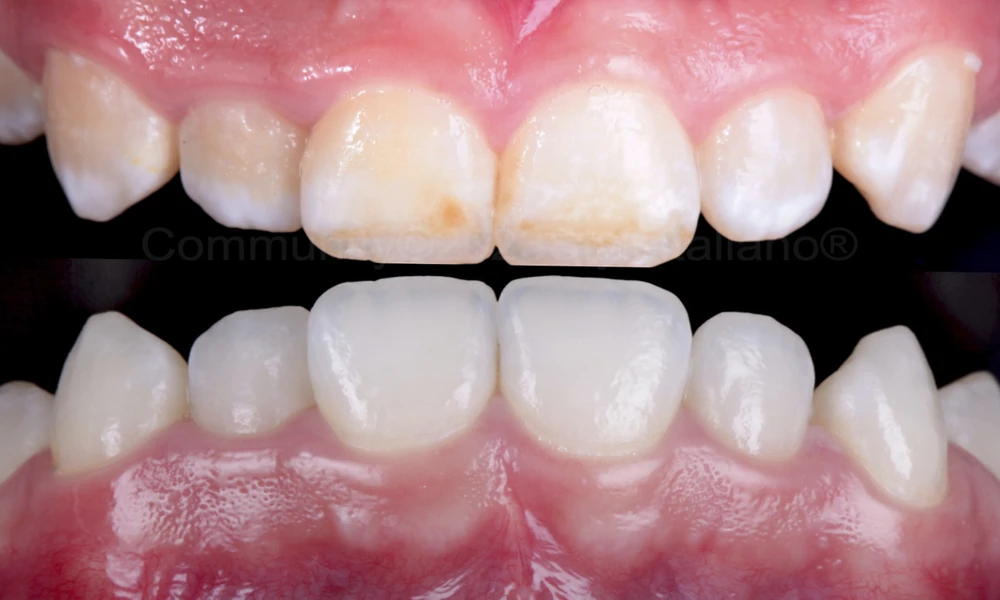
You noticed the white marks in photos first, or maybe under bright bathroom light when you leaned in a little too close. They do not always hurt, which almost makes them more frustrating. They sit there on the enamel, drawing your eye every time you smile, and you may be wondering if fixing them means drilling, filling, or shaving down healthy tooth structure. That fear is real. Most people want a cleaner, more even smile, but they do not want a bigger procedure than they need. If you are looking for personalized dental care in Plymouth, MA, you may be relieved to know there are often conservative options available.
For some white spot lesions, there is a middle ground. Resin infiltration is a minimally invasive treatment that can improve the look of certain enamel spots by penetrating the lesion itself instead of covering the tooth with a veneer or removing healthy enamel for a filling. It is not right for every white mark, and it does not replace a full exam, but for the right case, it can blend the area more naturally with the surrounding tooth.
White Spot Lesions Can Be Cosmetic, Early Decay, Or Both
White spot lesions are areas where the enamel has lost minerals. That change affects the way light passes through the tooth, which is why the spot can look chalky, opaque, or brighter than the rest of the enamel. Some appear after braces. Some develop from plaque sitting on the teeth for too long. Some are tied to enamel development, fluorosis, or past changes in mineralization.
The part that confuses people is that not every white spot means the same thing. One mark may be mostly cosmetic. Another may be an early cavity that has not broken the surface yet. A third may be too deep or too irregular to respond well to conservative treatment. That is why guessing at home rarely helps. Whitening strips can make the surrounding enamel brighter and leave the white spot looking even more obvious.
If that has happened to you, you are not imagining it. A spot that once felt minor can start to feel like the only thing you see in the mirror.
Resin Infiltration Treats Certain White Spot Lesions From Within
Resin infiltration for white spot lesions works by placing a low viscosity resin into the porous enamel lesion after the surface is prepared. Once the resin penetrates the lesion and is cured, the area can reflect light more like healthy enamel. The goal is not to place something bulky over the front of the tooth. The goal is to improve the lesion by filling its microscopic spaces.
That difference matters. A veneer covers the front surface. A filling usually requires removal of tooth structure if decay has progressed. Resin infiltration is designed for select early lesions where the surface is still intact. This is one reason many dentists consider it part of minimally invasive cosmetic and preventive care.
Research supports that approach. A published review on minimally invasive management of white spot lesions using resin infiltration describes its value in improving esthetics while preserving enamel. Interest in this kind of conservative dentistry has also grown as more patients seek options that avoid drilling when possible, which is reflected in coverage of no filling, no drilling tooth technology.
Certain Lesions Respond Well And Others Do Not
This is where expectations need to stay grounded. Resin infiltration can work very well for post orthodontic white spots and some non cavitated enamel lesions. It may also help mask lesions that are shallow to moderate in depth. Results are often immediate, though some spots improve more than others.
Not every white area is a good candidate. Deep developmental defects, active decay that has progressed beyond the outer enamel, brown discoloration, pitted enamel, or lesions caused by factors that changed the enamel structure more severely may need a different approach. Sometimes a dentist may recommend remineralization first, or combine treatment with microabrasion, whitening, bonding, or another cosmetic plan.
If you want a perfect, uniform result from one visit, that hope is understandable. Teeth are not paintable surfaces. They are layered, translucent, and full of small differences in color and texture. The best outcomes come from matching the treatment to the reason the spot formed in the first place.
Professional Evaluation Helps You Avoid Overtreatment
One of the biggest benefits of seeing a general and cosmetic dentist is that you do not have to choose between ignoring the spot and jumping straight to aggressive treatment. A careful exam can determine whether the lesion is active, whether it is limited to enamel, and whether white spot lesion treatment with resin infiltration makes sense.
That can save money and tooth structure. If a spot can be improved without a veneer or filling, preserving enamel is usually the better path. If the lesion is not suitable for infiltration, you get clarity before spending time on treatments that will not deliver the result you want.
Comparing Resin Infiltration With Other White Spot Lesion Options
| Treatment option | Best use | Tooth structure removal | Appearance outcome | Limits |
|---|---|---|---|---|
| Resin infiltration | Certain non cavitated enamel white spot lesions, often after braces | Minimal | Can blend the spot by changing light reflection within the lesion | Not ideal for deep defects, cavitated decay, or some developmental enamel issues |
| Remineralization therapy | Early mineral loss, prevention focused care | None | May improve lesion health, cosmetic change varies | Often slower, esthetic improvement may be limited |
| Microabrasion | Very superficial enamel discoloration | Small amount | Can reduce shallow surface defects | Does not treat deeper subsurface lesions well |
| Bonding or veneers | More severe discoloration, shape issues, or lesions not suited for infiltration | Varies | Can mask the area more completely | More invasive, may require maintenance or replacement over time |
Three Steps You Can Take Right Away
Look at the timing and pattern. If the spots appeared after braces, whitening, or a period of dry mouth or plaque buildup, mention that at your visit. That history helps narrow down the cause and whether resin infiltration treatment is likely to help.
Pause at home whitening until you get an exam. Whitening may brighten surrounding enamel first and make white spots stand out more. If the marks already bother you, guessing can make the contrast worse.
Ask for a conservative treatment plan first. Tell your dentist you want to preserve healthy enamel if possible. That opens the door to options like remineralization, infiltration, or other minimal intervention before discussing more invasive cosmetic work.
A More Natural Fix Is Sometimes Possible
If white spots on your teeth have been bothering you, you do not have to assume the only answers are to live with them or cover the tooth completely. In the right case, resin infiltration can improve certain lesions from within and keep more of your natural enamel intact. The next step is a professional evaluation with a general and cosmetic dentist who can identify the cause of the spot and recommend the least invasive option that makes sense for your smile.